Superior Protection & Sustainable Innovation & Cost Efficiency – Straw Pulp Egg Packaging

Straw Egg Cartons: A New Choice for Cost Reduction and Green Upgrading on Farms
12 Jun,2026
The Farm to Market egg packaging process is about more than just providing eggs with a degree of protection. Packaging serves as an important factor in managing costs and providing a brand image. Farmers and distributors are looking at a new kind of environmentally-friendly packaging material, specifically straw egg cartons, over the past few years. With their excellent cost-performance ratio and sustainability credentials, these cartons are quietly reshaping the landscape of traditional egg packaging.
Made primarily from crop straw, straw egg cartons benefit from a widely available raw material base and a distinct cost advantage. For large-scale farms, packaging costs often represent a significant expense; straw egg cartons offer competitive pricing for bulk orders, making them particularly suitable for medium-to-large farms with daily outputs exceeding 10,000 eggs.
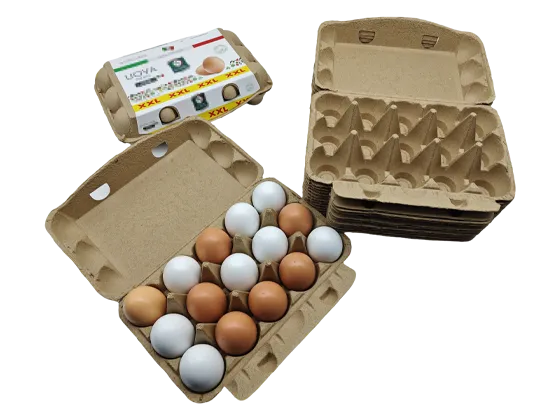
Straw egg cartons offer excellent cushioning and breathability, effectively reducing breakage rates during transport. Their optimized structural design ensures a snug fit for the eggs, preventing shifting and making them ideal for long-distance logistics. Additionally, the product undergoes moisture-proof treatment to maintain structural stability in humid environments—a feature of particular importance for farms located in high-humidity regions.
Their eco-friendly nature is another major highlight. With the implementation of "plastic bans" and rising consumer environmental awareness, the use of biodegradable packaging has become an industry trend. Straw egg cartons are fully biodegradable under natural conditions, cause no soil pollution, and align with the goals of green agriculture. For farms marketing themselves as "eco-friendly" or "organic", using such packaging helps reinforce brand positioning and enhances product value.
Straw egg cartons strike an ideal balance between cost, environmental sustainability, and practicality. For farms and distributors aiming for long-term, sustainable operations, they are a worthy addition to the packaging procurement list. Driven by both policy and market forces, green packaging has shifted from an "option" to a "necessity". Early adoption may well be the key step toward winning the next round of market competition.
Recent Posts



Address: RM1605, Building B, Kailun International Mansion, Jinmalu, Dalian Economic Development Zone, Dalian City, Liaoning Province, 116000
Sustainable Packaging:www.eco-pack.com

Chat