Superior Protection & Sustainable Innovation & Cost Efficiency – Straw Pulp Egg Packaging

Egg Shipping Boxes: Comparing Paperboard, Molded Pulp, and Corrugated Materials
23 May,2025
Shipping eggs is very different from placing them on a supermarket shelf.
During transportation, cartons can experience stacking pressure, vibration, repeated handling, changes in temperature and humidity, and the occasional rough movement that no packaging designer can completely avoid.
That makes the choice of material especially important.
For businesses sourcing egg shipping boxes, three materials frequently enter the conversation: paperboard, molded pulp, and corrugated fiberboard. Each has its own characteristics, and the right choice depends on how the eggs will be packed, transported, and sold.
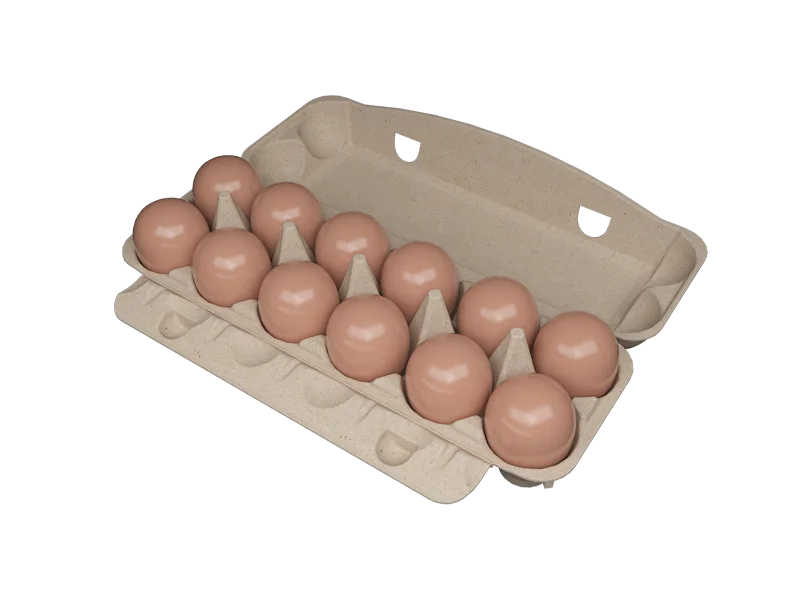
Paperboard: Lightweight and Brand-Friendly
Paperboard is widely used for retail-oriented egg packaging because it offers a relatively smooth surface that works well for printing and branding.
A paperboard egg box can provide a clean appearance, making it suitable for products where shelf presentation is a major consideration. Logos, product information, farm stories, certifications, and other graphics can be incorporated into the exterior design.
Another advantage is its relatively light weight.
For brands shipping eggs through established retail distribution networks, paperboard can provide a practical balance between presentation and packaging efficiency.
However, paperboard structures vary considerably in strength and moisture resistance. For longer-distance shipping or demanding logistics environments, the carton design and board specification need to be carefully matched to the application.
Molded Pulp: Protection Shaped Around the Egg
Molded pulp egg packaging takes a different approach.
Instead of folding a flat sheet into a carton, pulp fibers are formed into a three-dimensional structure. This allows the package to incorporate individual egg cavities, supporting walls, edges, and stacking features directly into the mold.
The result is packaging designed around the shape of the product.
For egg producers and distributors, this can be particularly useful because the internal structure helps keep eggs separated during transportation. Molded pulp also has a naturally textured appearance that fits well with brands emphasizing recycled or fiber-based packaging.
For companies looking to reduce dependence on plastic packaging, molded pulp can be an attractive option for both retail cartons and larger egg trays.
Corrugated: Built for the Journey
When transportation and outer-case protection become the priority, corrugated egg boxes have another advantage.
Corrugated fiberboard uses a fluted structure between paper liners. This construction provides useful rigidity and cushioning while keeping the overall package relatively lightweight.
It is commonly used for shipping cases, bulk transportation, and secondary packaging where the carton must handle stacking and warehouse movement.
For large-scale egg distribution, corrugated boxes can also be combined with internal egg trays. The outer box provides additional structural support, while the internal packaging separates and protects the eggs.
This layered approach can be particularly useful for longer supply chains.
So Which Material Is Better?
There is no universal winner.
The better question is: What does the packaging need to do?
If a brand places strong emphasis on printing, shelf appearance, and retail presentation, paperboard may be a suitable choice.
If product protection, fiber-based materials, and molded structural design are more important, molded pulp deserves closer consideration.
If the primary challenge is long-distance transportation, stacking, and secondary packaging strength, corrugated fiberboard may be the better fit.
In many commercial applications, these materials are not necessarily competitors. They can work together.
A molded pulp egg tray can hold and separate the eggs, while a corrugated shipping box provides an additional protective layer around the entire load.
Consider the Full Supply Chain
Choosing an egg shipping box based only on the material itself can lead to the wrong decision.
Purchasers should also consider:
- How far the eggs need to travel
- Whether the packaging is used for retail or bulk distribution
- Expected stacking conditions
- Warehouse and pallet configuration
- Exposure to humidity
- Required printing and branding
- Egg size and carton capacity
- Packing and grading equipment
- Storage and transportation costs
A package that performs well during short-distance farm deliveries may not be suitable for international distribution.
Likewise, a heavy-duty shipping solution may provide more protection than necessary for a simple local retail application.
The Growing Role of Fiber-Based Packaging
The packaging industry is moving toward greater use of renewable, recycled, and recyclable fiber materials.
For egg producers, this trend is creating more opportunities to rethink conventional packaging. Paperboard, molded pulp, and corrugated fiberboard each offer different ways to reduce reliance on plastic while addressing practical packaging requirements.
For B2B buyers, however, sustainability should be evaluated alongside performance.
A successful packaging solution needs to protect the eggs, fit the supply chain, work with the intended packing process, and make economic sense at commercial volumes.
Making the Right Packaging Choice
Egg shipping boxes are not simply containers. They are part of the logistics system.
Paperboard can bring strong retail presentation. Molded pulp can combine product-specific protection with a natural fiber appearance. Corrugated materials can provide the structural support needed for demanding transportation environments.
The best solution may be one material—or a combination of several.
For egg producers, distributors, and food brands, understanding these differences makes it easier to select packaging based on the actual journey the eggs need to make, rather than choosing a material simply because it is familiar.
Recent Posts



Address: RM1605, Building B, Kailun International Mansion, Jinmalu, Dalian Economic Development Zone, Dalian City, Liaoning Province, 116000
Sustainable Packaging:www.eco-pack.com

Chat