Superior Protection & Sustainable Innovation & Cost Efficiency – Straw Pulp Egg Packaging

How do straw pulp egg tray manufacturers ensure product strength
03 Jul,2026
Straw pulp egg trays, as an environmentally friendly packaging material, have seen increasingly widespread application in agriculture and food transportation in recent years. For buyers, product strength is a crucial indicator of quality. So, how do straw pulp egg tray manufacturers ensure product strength? This can be understood from several aspects: raw material control, production process, structural design, and quality inspection.
First, the selection of raw materials is fundamental to strength. High-quality straw pulp egg tray manufacturers typically select straw raw materials with longer fibers and fewer impurities, and thoroughly pulp them using mechanical or chemical methods to achieve a more uniform fiber structure. The more complete and rationally distributed the fibers, the less likely the formed egg tray will break or deform.
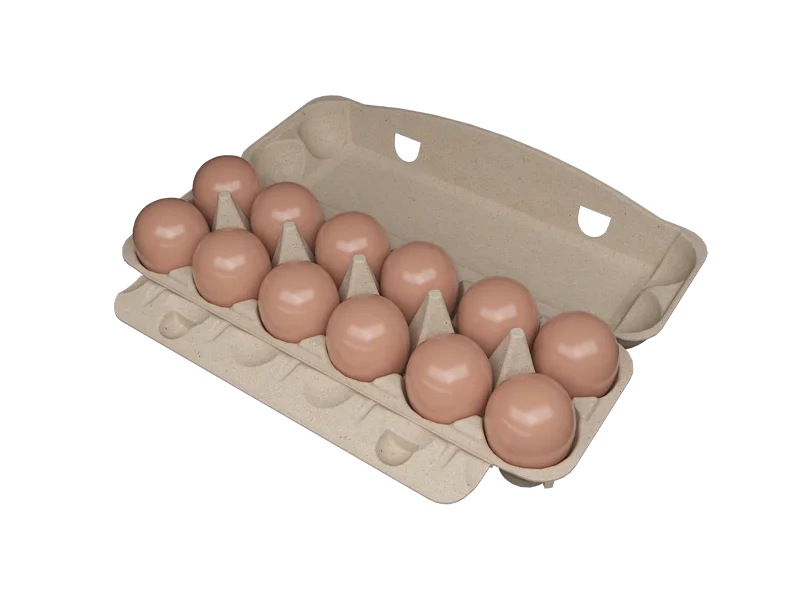
Second, the production process is critical to strength. Manufacturers are responsible for managing both the moisture ratio and pulp concentration during the molding process to distribute fibers uniformly throughout each component using a technique known as layering. That method also provides additional strength to the bond between the fibers using the addition of high-pressure molding and vacuum adsorption technology, which increases the structural density of the finished component. Hardness and toughness of the product are also improved during the hot press and drying process to prevent weakening or distortion of the product due to high moisture content.
Third, structural design is also a crucial means of enhancing strength. Straw pulp egg trays are not simply planar structures; they utilize a three-dimensional honeycomb or reinforced structure to disperse external forces. When subjected to compression or stacking pressure, this structure effectively disperses stress, reducing the risk of localized breakage and thus improving overall load-bearing capacity.
Furthermore, different manufacturers vary in mold design. Some experienced manufacturers optimize the tray's groove depth, edge thickness, and support points based on egg size and transportation requirements, ensuring both lightweight construction and good compressive strength.
In the end, the most important thing that ensures the egg tray is strong is by performing thorough quality control testing. Top straw pulp egg tray manufacturers typically perform compression tests, drop tests, and stacking tests to simulate how the tray will be shipped and stored in the real world and to confirm that the tray won't be easily damaged while being stored and transported. Only products that pass multiple tests are allowed to enter the market.
The strength of a straw pulp egg tray is not determined by a single factor but is the result of the combined effects of raw materials, manufacturing processes, structure, and testing. For purchasing companies, choosing manufacturers with mature production systems and strict quality control processes ensures more stable and reliable product quality.
Recent Posts



Address: RM1605, Building B, Kailun International Mansion, Jinmalu, Dalian Economic Development Zone, Dalian City, Liaoning Province, 116000
Sustainable Packaging:www.eco-pack.com

Chat