Superior Protection & Sustainable Innovation & Cost Efficiency – Straw Pulp Egg Packaging

How to Assess Whether Straw Pulp Egg Cartons Meet Load-Bearing Standards
11 Aug,2026
As the demand for eco-friendly packaging grows, straw pulp egg cartons have become a key choice for egg producers, food packaging suppliers, and agricultural supply chains. Compared to traditional plastic trays, straw pulp egg cartons utilize renewable straw fibers as their primary raw material; they offer not only environmental benefits but also excellent cushioning, shock absorption, and protective qualities. However, for bulk purchasers, the load-bearing capacity of the carton directly impacts the safety of egg transport, making it crucial to verify that quality standards are met.
First, consider the quality of the raw straw pulp. The load-bearing capacity of a straw pulp egg carton is closely linked to the strength of the raw fibers. High-quality straw pulp typically undergoes processes such as shredding, pulping, and screening to ensure a uniform fiber structure and enhance the carton's overall strength. Conversely, the use of low-quality pulp or inadequate fiber processing can lead to issues like insufficient thickness or a loose structure, potentially causing deformation or breakage during transport.
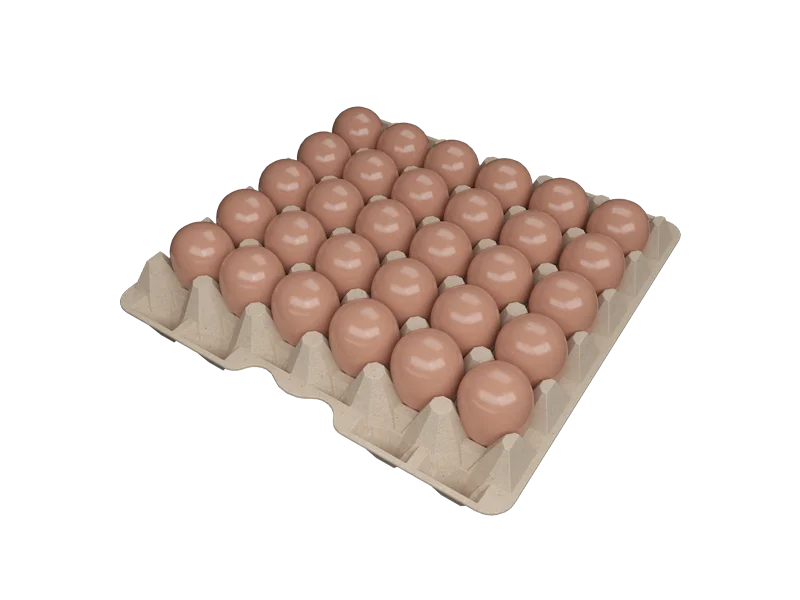
Second, load-bearing performance can be assessed through the product's structural design. High-quality straw pulp egg cartons often feature a well-engineered honeycomb support structure that distributes pressure across multiple independent egg compartments, thereby improving overall stability. When purchasing, inspect the support pillars between compartments, edge reinforcement structures, and the bottom support design; these elements directly influence the carton's compressive strength during stacked transport. A well-designed tray effectively minimizes the crushing force exerted on the eggs, even when stacked in multiple layers.
Third, practical load-bearing tests should be conducted. Purchasing companies can request relevant test data from suppliers, such as static load tests, stacking pressure tests, and simulated transport tests. During testing, observe whether the straw pulp egg carton collapses, cracks, or deforms significantly under varying loads. For cartons intended for export or long-distance logistics, the impact of vibration and humidity during transit must also be considered.
Additionally, product thickness and moisture content are critical factors affecting load-bearing capacity. While straw pulp is an eco-friendly material, improper moisture control during production can compromise the carton's strength. Reputable manufacturers typically control product density through molding and drying processes to ensure consistent hardness and compressive strength. Therefore, buyers should familiarize themselves with the supplier's production techniques and quality control procedures.
At the same time, it is essential to select the appropriate specifications based on actual application requirements. Egg cartons must meet varying load-bearing standards depending on the quantity and weight of the eggs they hold; for instance, there are significant differences in the structural strength required for standard household packs, small retail packs, and bulk transport packaging used by large-scale farms. Large-scale purchasers should clarify specifications—such as egg size, pack quantity, transport method, and stacking height—in advance to select the most suitable straw pulp egg carton solution.
Assessing whether a straw pulp egg carton meets load-bearing standards requires a comprehensive evaluation of raw material quality, structural design, manufacturing processes, test data, and the actual usage environment. Selecting a supplier with rigorous quality control and stable production capabilities not only enhances the safety of egg transport but also helps businesses achieve eco-friendly packaging goals and reduce losses during transit.
Recent Posts



Address: RM1605, Building B, Kailun International Mansion, Jinmalu, Dalian Economic Development Zone, Dalian City, Liaoning Province, 116000
Sustainable Packaging:www.eco-pack.com

Chat